Tuesday, 12 April 2016

Inflation Will Rise More Than Expectation

The competitiveness of the country’s export is determined by the trade weighted critical real effective exchange rate in the international market. The real effective rate exchange rate may even depreciate when the nominal exchange rate is falling down. The best example is that of an appreciation of Pak Rupee in terms of US dollars from 100 to 105.
Hence we can say, the competitiveness of a country’s trade may take worst situation even when the nominal value of the country’s currency is lost.
The data of State Bank of Pakistan shows that since 2010, country’s trade weighted nominal exchange rate (NEER) has depreciated by 7%. During the same period of time, Real Effective Exchange Rate (REER) has appreciated by 23% till January 2016. Over the last two years the appreciation in REER has been much more noticeable. This is the time period that coincides with the continuous decline country’s exports.

Exports of Pakistan have dropped in terms of dollar by 14.4% during the first half of the fiscal year 2016. The result is further worsening of balance of trade by 4.3%. 
There have been numerous reason behind such structural reasons. Energy crisis can be jotted down on top of the list that has adversely affected the export growth. The recent back fall has been faced due to the loss of competitiveness of the domestic prices in the international market.
Unfortunately very less attention has been paid to the dynamics of exchange rate as a source for poor performance of the exporting sector. The composition of the export basket and entire structure of the economy has made the overall REER more vulnerable.
At the same time, with appreciation in REER appreciation, the total import demand has been increased due to the relative decline in the import prices. The data of State Bank of Pakistan suggests that the imports of Pakistan have been sharply increased in terms of US dollars since fiscal year 2013.
The REER of Pakistan has appreciated between fiscal year 2014 to 2015 from 5.6% to 8.8%. This has put worst impact on competitiveness of the local products. With inflation rate set as target by State Bank of Pakistan below 6%, devaluation of the currency can be one of the solution to achieve set inflation target through demand and cost effect.


Sunday, 10 April 2016

Stock Market and Oil Prices Correlation: Why From 25% to 91%?

Oil and water do not mix together but stock prices and oil prices does!
Both, the oil prices and stock prices were declining with the correlation of about 91% when oil prices dropped down to $40 per barrel in December 2015. Leo Chen who is the quantitative analyst at Cumberland Advisers called this correlation a “black swan”. According to him this correlation between oil prices and stock prices is not usual.  
From past five years the correlation between S & P Index and the oil prices was negative 71.8%. This shows that the stock prices and oil prices move in opposite direction. If oil prices rise, the stock prices fall and vice versa. However, from past twenty years this correlation has not been more than 25% as compared to current 91%.

Now the question here is what is so few and far between now and then?
As we know that these days the oil prices have been declining from the last quarter of 2015 in the international market. However globally this drop is not being considered as a good news. But why?  Why this decrease in oil prices is not welcomed in the economy?
It’s quite complicated!
There are many reasons behind this and different analysts and investors hold different view point. Some believe that this drop in oil prices is bad news for the corporates as it would affect their profits in the long run due to less demand of oil. This also includes productive economies like China, where the growth productivity has gone slower. Another school of thought relates it to prevailing trend of dollar in the exchange rate markets.
In order to understand the phenomena behind the swift dropping of oil prices, you may visit my article Dropping Oil Prices: An Alarm for Saudi Arabia. To get more information on current trend of dollar in the exchange market, visit my article
We may believe that there are several other ingredients involved in this oil and stock curry which are adding flavors to confuse the whole recipe. We may also say that if the investors would take a flight from commodity markets due to prevailing uncertainty and high risk aversion then the volatility in the stock market may also be another reason for the stock market and the oil prices to move in same direction against the norm.

However, the good news is that recently the slight temporary boost in the oil prices also raised the sentiments on Wall Street and the Dow moved up sharply. The blue chip companies got up with 153 points. 

Friday, 8 April 2016

What Put Gold Market On Fire?

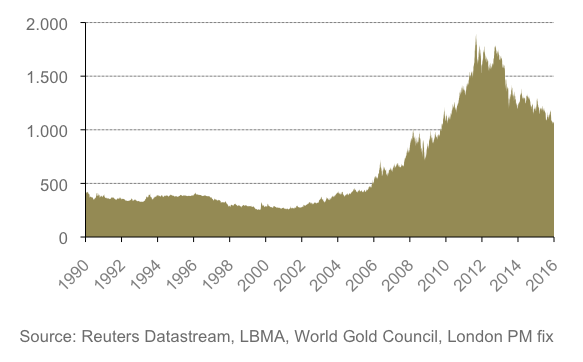
Gold price is on fire. It looks like something big has happened in the gold market. There was a magnificent change of trend in the gold prices from the mainstream during the first quarter of 2016. This shows that the investors are having insecurity about stock market and they are finding a way towards safe investment somewhere else… gold market may be…
Over the past several years gold market the gold market has been agonized by the decline in the outflow of gold from Gold ETF’s and Funds. This decline in the new outflows brought a drastic change in the international gold market in first quarter of the year.

According to Gold Demand Trends of World Gold Council the entire gold market suffered the net outflows from Gold ETF’s and such similar funds except for the small outflow of 25 metric ton that was built during first quarter of 2015. In the first quarter of 2016, this out flow was built up to 363 metric tons which is actually recorded to be the second highest build in the history of Gold ETF’s and Funds.
The first highest metal inventory was built at Global Gold ETF’s and Fund in first quarter of 2009. This was the time when stock markets were crashing down at their lowest levels. AT that time, the Global Gold ETF’s and Fund inventories rushed at 465 metric ton which was the highest ever.
There three important factors that act as driving force for bringing major change in gold markets are:
  1.  Net Sales and Purchases by Central Bank
  2.    Demand of gold coins and bars
  3.         Gold ETF’s and Fund Flows

When the Central Banks in West dumped 663 metric tons of gold in the market by the year 2005, the result was decline in the demand of total gold investment that reached 58 metric ton. This can be compared to the situation of gold investment demand of the year 2012 when it reached 2174 metric ton. This was an outrageous swing in the investment demand of gold with the difference of 2232 metric tons from 2005 to 2012. This catalyzed the prices of gold to hit as high as $ 1669 in Q1 of 2016.
In current situation, the investors need to realize that the popping up of wide Bonds and Stocks markets by Fed and other central banks won’t last forever. There might even be the possibility that Gold ETF’s and Fund Flows won’t even be having the gold that has been declared on records. The evidence of this is massive investments in paper gold. The investor only invests in the certificate and never gets to have gold in physical form. Most of the demand of gold investment is fulfilled this way. What investors really need to know is that if the flow of the mainstream investors would sign of things to come in future the things are really going to take new twists and turns by the year 2017.


Thursday, 7 April 2016

WHo Are The Real Victims of Panama Papers?

For as much time as the companies and influential individuals would keep hiding their wealth in the offshore companies, the developing countries would continue to have money loss that could have been used in order to provide the basic public services that could help to alleviate and assuage poverty from developing economies.
This Saturday almost 11.5 million secret documents suspected to have connection with Mossack Fonseca, a Panama based law firm were leaked as an anonymous source transferred those documents to Süddeutsche Zeitung, a German newspaper. The newspaper then shared these documents with International Consortium of Investigative Journalists (ICIJ).
These files are the clear evidence that how there are countless ways exiting at the disposal of rich authorities to secretly offshore the wealth even through organized tax regimes. The names of several companies, celebrities and politicians have been high lightened  among which some of the high profile names include Ex- Prime Minister of Iraq, Ayad Allawi, the President of Ukraine, Petro Poroshenko, the former President of Sudan, Ahmad Ali al-Mirghani etc.

 Some of the news sources have mentioned that former Prime Minister of Iceland, Sigmunder Gunlaugsson who recently resigned was the first victim of Panama papers.
However, according to some experts view point, the game in which there is massive avoidance of tax does not only involve elite and influential tycoons. The actual victims of Panama Papers are the remaining 9.5 million people who have total net worth of less than $1 million   and they are simply categorized as “Everyone else “in the global wealth table of Tax Justice Network.
According to John Christensen who is the co-founder of Tax Justice Network, UK, Panama papers are an abuse to human rights. According to him the actual victims are the ordinary people because if the rich person is evading tax it means ordinary people like us are actually paying the deficit created by his pocket. The same happened in several countries where value added taxes have been imposed but still the public services are not provided the way they should have been.
There have been global efforts going on for the uplift of the countries like Sudan, Nigeria, Malawi but these efforts are badly hindered due to tax evasion. This happens because in most of the cases the tax avoiders often transfer their money through the countries where there is unfair tax policies and pacts. These are those countries which are also poor economies and have no law and order. With this they have less to spend on infrastructure, healthcare, education, shelter etc.
This explains the hemorrhage of foreign aid that these economies receive.
To make complex things simple, in order to manipulate the taxes, the companies that are working in developing countries set up the subsidiary in the tax haven. After this they sell their products to this subsidiary at lower prices in order to reduce their tax burden. Ultimately this subsidiary sells the products in the market at higher rates and huge profits are secured at either lowest or no tax rates.
In other words we can say that the companies first manipulate the prices of their products in order to avoid tax and the outcome of this is borne by the countries with unfair tax policies leading them into vicious circle of poverty because due to less tax revenues they are unable to feed their own economies. In Africa it has been estimated that 60% of the capital flight of the nation is due to this practice.
Malawi is one of the poorest country of the world with 50% of its population living in poverty. The tax revenues that are meant to develop and restructure the economy is diminishing at an increasing rate. Similarly, 30% of the African economy’s wealth is held offshore in tax havens and is leaving Africa with tax revenue loss of $ 14 billion per year. Nigeria has been experiencing one of the most illegal outflow as percentage of GDP (Gross Domestic Product).

Tax avoidance game has adverse consequences on developing economies where a single buck contributed to tax revenues can become source of development and improvement in the basic infrastructure, healthcare and education. Each dollar paid as tax can lead the economy towards self-sufficiency where they would no longer be relying on foreign aid. 

Wednesday, 6 April 2016

Wall Street Once Again Wagering Upon Dollar: Will Dollar Rise or Fall?

Once again Wall Street is betting that the great dollar correction is going to begin. So is it true that dollar is actually in the middle of great correction? Or it is just that it’s a normal news trying to take hype in the exchange markets?

The trend of the market strategists, brokers and investors tend to be on the latter side of the wager. The reason behind this notion is driven by the fact that all the largest central banks of the world have simply given up on making efforts to make exchange rate to be correctly influenced by the monetary policy. This has happened due to large number of reasons that have its linkages from the past.
However, in this interim, the most recent uptick in the inflation rate of United States is engulfing the real interest rate differential which is the difference between the returns on the US dollar denominated assets and the prices of those assets in the foreign currency after inflation adjustment.
To make long story short, with the rise in the inflation, the returns on US denominated assets will decline as compared to their relative prices in the foreign currencies and the dollar would become less attractive for the local as well as foreign investors and dollar would be weaken even more.
The data reported by Futures Trading Commission this Friday shows that the aggregate of the total bets on the notion that dollar will appreciate has dwindled to its lowest level since the mid of July.
The head of the global currency strategy, Vasileios Gkionakis stated at UniCredit Bank that the central banks of the world are stepping back from their obsession of currency and that they are coming out of this massive overvaluation of dollar.
 According to Vasileios Gkionakis at first, the dollar appreciation wagering was fueled by the expectations of the investors that with the increase in the interest rates, the US dollar will go up as the relative interest rates of other countries would go down which will broaden the interest rate differential of US with the rest of the world. However, even these expectations swiftly got out of hands. In the first half of year 2015, the pair of Euro-Dollar bottomed out to as low as USD 1.50. This value was much lower to even justify than the expectations for the policy divergence.
After this entire scenario the investors are re-assessing the stance for their greenback currency. The head of the global currency expects the dollar to drift downwards in the upcoming years even in the condition when the US interest rates would boost up. This may be because the dollar has already been priced in standardization in monetary policy more than what the returns on treasury bills reflect it to be.
There is no coincidence. The weakening of dollar is happening just because of the pitfalls of the ultimate shifts in the way monetary policies are designed and conducted by the central banks for negative interest rate. Moreover there are further potential risks that are yet to be foreseen due to the negative rates of other countries. According to Bill Gross, one of the great bond investors, the negative rates would do nothing but put out downward pressure on the entire financial system.
However, Gkionakis has keenly noted that there is an additional risk attached to his perspective. There could be a rebound in US growth more rapidly than expected as a result of the ongoing trend. For this the gains and returns on the investment have to be strong enough to influence the investors to invest in the speedy fluctuations of interest rate.
There are still a large number of currency strategists and investors who are with the notion that dollar will strengthen by the end of the year. They believe that weakening of dollar would be short-term and temporary. The global strategists of Bank of America believe that they foresee Euro finishing the year with equivalent fate as dollar.

However, the recent uptick in US inflation and expectations regarding pickup in inflation would probably continue to weigh the dollar in the near future. According to Bank of America, the current trend of the policy divergence would again drive the US growth to outperform. They believe that soon the world would see investors rushing towards the dollar with euro equally competing in the market for the first time since 2002. 

Monday, 4 April 2016

Dropping Oil Prices: An Alarm for Saudi Arabia

The continuous drop in oil prices is a threat for Kingdom Saudi Arabia as their economy is highly dependent on oil. If the kingdom would do nothing about it, they may run out of money by the year 2020 as anticipated by John Mauldin who is the chairman of Mauldin Economics. According to Mauldin the kingdom is taking appropriate steps to stay submerged however, they are acting like a company rather a kingdom in this matter. The kingdom has to realize that they are not company after all. The population will be greatly affected if they will continue the Federal cuts on spending. Those who work for the government would be adversely hit and surprisingly almost 90% of the people in the kingdom are working for the government.

Now the question comes why there is such drastic drop in the oil prices anyway?


It is simply due to the change in demand and supply phenomena. As the supply and demand of certain product affects its price, the lower would be the demand, the lower would be the price or otherwise, the more will be the supply, the lower will be the price.  Here comes the point that whether the demand of oil has been decreased or the supply has been increased so that Saudi Arabia is facing a difficult situation?

In order to understand this we first have to take a look at mid-2000s when the oil prices were rising in a very sharp manner because there was a surge in the global demand especially by the countries like China and there was not enough of the oil supply to meet the growing demand. This led to an increase in the oil prices and the oil price drifted around $100 per barrel during 2011 to 2014. With an increase in the oil prices many companies found this business profitable and started exploring and extracting oil. They even started drilling at the most difficult places. In United States the companies started using fracking and horizontal drilling techniques in order to extract oil from Texas and North Dakota. Similar was situation in Canada where the oil companies begun to heat gooey oil sands of Alberta with intense steam in order to extract the crude.

This situation led to a great boom in the constricted oil production. The United States alone contributed around 4 million new oil barrels per day to the international market since 2008. The global crude production increased significantly up to 75 million barrels per day. However, this boom in the US oil production did not bring much of the significant impact on global oil prices. The reason was that United States and European Union put oil sanctions on Iran whereas, Iraq was fighting external war with US and Libya was under severe civil war. Hence even though supply increased in one zone of the globe, at the same time it decreased from the other part of the world.

The tables turned after mid of 2014. There was an ease in the sanctions that were slapped earlier. By July the rebels in Libya opened two main export terminals that had been shut closed for almost a year. This raised the oil exports of Libya radically. During this time the oil demand dropped in Asia and Europe. Mainly China and Germany decided to slow down their demand. United States that was once considered to be the largest oil consumer faced greater cutbacks in oil industry due to recession in the economy. Moreover, countries like Iran and Indonesia decided to cut back their subsidies on oil. The overall low demand and high supply of oil caused drop in the oil prices from USD 115 per barrel in June 2014 to USD 80 per barrel in November.

Now comes OPEC that has a cluster of oil-producing countries that pump almost 40% of the world’s oil. In past, this lobby had made several attempts to influence the oil pricing to rise or fall through strong coordination to either cut back or increase the production of oil. On 27th of November 2014, 166th Meeting of OPEC took place in Vienna in which a heated debate took place among the OPEC members regarding fall in the oil prices. Some countries like Iran and Venezuela wanted the cartel to cutback the oil production so that the prices of oil increase. They specially wanted Saudi Arabia to cut back its oil production. The countries who were in favor of production to be cut back actually needed to have high oil prices to meet break-even point on budgets and pay off the government spending that have been piled up.

On the other hand, Saudi Arabia was in the opposing side of the house and they were against the motion. Saudi Arabia wanted to retain the oil production and was in favor of oil prices to be dropped. The reason for this was the event of 1980 when the oil prices were falling and countries cut back their oil productions to boost oil prices. The result was that the oil prices still kept declining and Saudi Arabia lost its market share. According to Saudi Arabia they can live with the falling oil prices as they believe that it is temporary and short lived. The Saudi government has already built up a huge foreign exchange reserve in order to finance the deficit.

In the end, the debate ended with the conclusion that there will be no change in the oil production and Secretary General of OPEC, Abdalla El-Badri declared that the oil will be produced at 30 million barrels per day. This caused the oil prices to drop further and the price went down from USD 80 per barrel to USD 70 per barrel, and reached below USD 60 a barrel by mid of December 2014. In the ongoing situation Mauldin predicts that as United States is a wildcard player so they will be able to get profits even at USD 40 per barrel due to its lower production and innovation in technology. However according to him even if now the oil price rises to USD 60 per barrel, Saudi Arabia would not be able to stand where it used to be in the good old days.  The situation is alarming as recently on 4th April 2015, the oil prices have dropped down below USD 36 per barrel.  


Monday, 30 November 2015

The Euro As Reserve Currency


The currency used by the official sector for the use as an international currency to perform operations is referred as reserve currency.There are three main components of foreign currency which are medium of exchange, store of value and unit of account.

Monetary authorities usually use this currency as exchange rate tool to obtain monetary objectives, to intervene in foreign markets and to safe keep wealth. The private sector has a separate use of foreign currency and mostly use for invoicing. The choice of international currency is not decided by Government. The private sector determines the choice of international currency to be used.
The reserve currency is dependent upon four factors:
1.      Share of the country in the international trade.
2.      Macroeconomic stability
3.      Market development in term of liquidity and breadth.
4.      Network externalities of how other countries are using any currency as reserve currency.

Status of Euro:

During post-war era Dollar was dominant because it macroeconomic stability, network externalities and financial development. In 1990 EMU started debate on the potential of the euro against dollar. Some researchers argued that the attractiveness I dollar is due to its liquidity in T-bills as compared to euro. It is believed that the major limitation on euro is to play international role is due to the obstacle in full integration of euro government bond market.
One view point is that having two currencies at a tie as international currencies would make system inefficient. Studies show that euro is more sound currency as medium of exchange than the store of value. Researchers also argued that after monetary union euro’s role would match dollar in international markets. International investors should invest in euro to diversify and hedge their macroeconomic risks.

Composition Of International Reserves:

Official reserve assets are being well diversified nowadays. The share of euro is increased after monetary union however still it is lower than dollar. In 1990 the nadir of US was 455 of reserves and deposits. By 2007 it increased to 70%. However, it declined to 59% by 2006.
The main reason of decline was adoption of euro and diversification of reserve currency. Studies show that the reserve managers in Asia respond asymmetrical to valuation effect. These managers respond to interest rate more than exchange rates fluctuations.
The reserve allocation of euro has increased significantly from 19% to 27 % from 1999 to 2003. However, the financial allocation is more in euro region than in Asia or America. Since 1970 the reserve managers tend to attract more towards instrument perceived portfolios due to risk-adjusted returns. Now reserve managers invest in longer –dated debt securities than deposits.

Role as a Medium of Exchange

Traditionally, reserve management has been guided by two basic reasons. One is to prepare for contingencies and the other is an emergent need to intervene in financial market. This requires for holding reserves in the most liquid form, which is referred to as ‘liquidity tranche’. It occurs due to the potential need to turn assets into cash on short notice and at low cost under different market conditions. This role of medium of exchange may arise in the foreign exchange market or in government securities market.

Foreign Exchange Markets
The choice of the currency for intervention in the FE market is mostly dependent upon the liquidity conditions in foreign exchange markets. Because when there is need to influence a bilateral exchange rate, it is sometimes more effective to do so in a third, more heavily traded currency. While the euro seems to be as liquid as its predecessor currencies, it is unclear whether the euro has become more or less liquid compared with the US dollar (Galati and Tsatsaronis, 2003). The results of the 2007 BIS Triennial Survey of Foreign Exchange and Derivatives Markets reveal that the euro entered on one side of 37% of all foreign exchange transactions in April 2007. The dollar’s share in foreign exchange markets was little changed between 1998 and 2007 at about 86%. Dollar/euro was by far the most traded currency pair in 2007, capturing 27% of global turnover.

Money and Government Securities Markets
The choice of intervention currency is influenced by liquidity conditions in asset markets. Reserve managers typically invest the bulk of their reserves in instruments with limited market and credit risk.
EMU increased the attractiveness of diversifying reserves from dollars into euros by creating the second largest government securities market in the world. However, there are certain advatages that Dollar has over Euro, which are discussed as under:
  • US Treasury market that makes it a relatively more attractive destination for reserves is the large bill market. The short-term segment of the US Treasury market is much larger than its euro equivalent, mainly owing to the limited issuance of treasury bills in the euro area.
  • The other advantage is in terms of homogeneity and high credit quality of the US Treasury market. There is one issuer, rated AAA. On the other hand, 12 different issuers participate in the euro government securities market. Furthermore, several euro area governments are rated below AAA, and so the average rating of outstanding euro government securities is AA1.
  • The most important advantage the US Treasury market has over its euro or yen equivalents is its tremendous liquidity. The daily turnover of US Treasuries greatly exceeds that of any other instrument. While turnover is not synonymous with market liquidity, it can be indicative of the depth of the market, i.e. the size of the order flow that the market can accommodate without moving prices (CGFS, 2000)
Hence we can safely assume that the US dollar retains several advantages over the euro as a medium of exchange. The US dollar is more widely traded in foreign exchange markets, and dollar government securities and repo markets are more liquid than their euro counterparts. This supports the continued pre-eminence of the US dollar as a reserve currency. Therefore,  for intervention purposes the euro is an increasingly attractive alternative to holding dollars.

Role As Unit Of Account
Broadly the Unit of account characteristic of reserve currency fall in two broad categories:
  • In private use this role is linked to the currency of choice for invoicing.
  • In official use it is linked to the choice of an exchange rate as a monetary anchor.
This role heavily depends on the direction of trade among the countries and relative stability of the macroeconomic policies of the host country which owns the currency. In summary, evidence from exchange rate co-movements suggests that the euro plays an increasingly important gravitational role. Ceteris paribus, this would tend to boost the euro’s share of global reserves over time. The US dollar, however, is still the most important currency along this dimension. Since 2002, the US dollar has depreciated against many currencies, and so the higher co-movement of currencies with the euro may reflect temporary dollar weakness rather than a long-term increase in the euro’s influence.

ROLE AS A STORE OF VALUE
For this role of a reserve currency it is important for the reserve managers to choose a currency which has a rather reliable future in terms of its future purchasing power. Hence, this aspect mostly relies upon the future prospects of a country. The store of value aspect of reserve currency is directly related to the investment policies of the governing authority as well as the level of development of financial instruments available for investments in that currency for gaining exposure to, or hedging, these risks.


CONCLUSIONS
The main theme of this paper was to investigate how the euro’s role in international financial markets has influenced the use of euro-denominated assets as official reserves. The introduction of the euro in 1999 as a single currency for multiple countries, which were highly developed and extensively involved in trade, resulted in extensive debate in academia as well as professional circles regarding future role of Euro and fate of Dollar.  With extensive development of euro financial markets, there is a view that Dollar might lose its position as a dominant reserve currency at global level. Nevertheless, in terms of size, credit quality and liquidity, dollar financial markets still have an edge over euro markets. This is the main reason why Euro is currently not in a position to compete with Dollar in the international market.


 Author: Zarmeen Mushtaq , Sofia Khurrum

Sunday, 21 June 2015

Yulin

There have been various  social media campaigns raised these days with the hash tag #stopyulin,
so I thought  to share the back ground and philosophy behind Yulin.  In actual Yulin  is a city  of China which is located in southern  region.  The literal meaning  of Yulin is Jade Forest.

The Southern  region of China has been celebrating  cats and dogs meat festivals since 1990. From
past few years this festival had taken attention  of various  pets rights activists  who believe that
slaughtering  pets is illegal.  In 2013 the campaign  highlighted  the event in such a negative manner that the local Government even refused that such event ever existed.


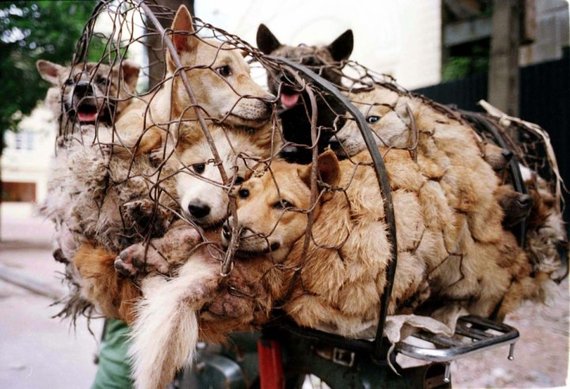
The worst part is that every year in summers the residents of Yulin slaughter,  steel, torture and eat
over 10,000 dogs. They boil them alive, rip their skin off, put them in small cages, beat them, provide them with electrical  shocks  and hook their heads and bodies as a display.


The philosophy  behind torturing  the dogs is that if they are given physical  pain before slaughtering, the meat would become even tastier due to discharge  of adrenaline hormones.  Several  petitions
have been written to request the local Government  of Yulin to put an end to this cruel and inhumane
practice.

Monday, 2 June 2014

FOOT CARE FOR DIABETIC PATIENTS

Diabetes is one emerging and rapidly increasing disease. In routine course the people do not consider foot care to be an important part of their health which is truly wrong. However, diabetic patients cannot take their feet for granted. There are two major complications that can be faced by diabetic patients when it comes to their feet. First is diabetic nerve damage and the other is poor blood circulation.  These two complications lead to problems such as ulcers that may go severe to become amputations. 

Complications:

  1. The common foot problems faced by diabetic patients are: corns, calluses, bunions, ingrown toe nails, arthritis and even broken bones and ruptured vessels.
  2.  The people having diabetic nerve damage can not even feel the wound or ulcer on their feet. They may keep walking miles without feeling any pain caused due to skin damage or wounds as a result of which the area gets infected.
  3.  As the people with diabetes have poor blood circulation so enough oxygen is not carries by the red blood cells to their feet. Moreover, its blood cells that carry antibiotics to the infected areas. When the blood supply will be insufficient the feet will not get enough oxygen and antibiotics would not be carried which will result in failure of wounds to get healed rapidly and properly. 
  4. Diabetes patients have high blood sugars which can interfere the natural immune and defense system of the body. When the defense system is interrupted the white blood cells find it hard to heal the wounds. 
  5. The fungus attacks are more frequent in case of diabetes, as the fungus grows more in the presence of sugar. When the foot skin will be damaged, the germs will enter easily. In the presence of moisture and availability of high sugar in blood the fungus will find perfect conditions to grow.
Tips To Prevent Foot Problems:

Here are some daily based practices which may help to prevent above mentioned complications:

  1. Touch your feet everyday: tops, bottoms, backs, sides and in between the toes.
  2. Keep feet clean and dry.
  3. Cut the nails and file the edges properly.
  4. Moisturize the dry feet skin daily with good lotion.
  5. Avoid injuries to feet.
  6. Wear well fitted socks made from material that wicks away the moisture and sweat. 
  7. Wear soft shoes and avoid flat shoes.
  8. Check the cracks in the shoes. If any cracks found, replace your shoes with the new ones.
  9. Exercise daily and keep you weight under control.
  10. try to keep blood sugar level under control and monitored. 


Friday, 31 January 2014

Highlights of First Month of 2014 for UNO __ Part II


Continuing from where I ended. In the previous part the UNO’s progress upon peace and security, women and children and economic development were discussed. In this part culture and education, environment and shelter, humanitarian aid and refugees, human rights and updates on crime, laws and prevention of these crimes are discussed.
In the month of January, UN agencies urged to stop killing various journalists in various countries. During this month three journalists were murdered in separate attacks that took place in Southern Philippine. 6 journalists were murdered in two attacks in Iraq and Zakir Ali was murdered in Pakistan in the region of Sindh.
Due to South Sudan unrest, several children from primary schools failed to take their final exams. This month, hundreds of students were assisted by UN to give final exams in South Sudan and complete their primary education. However, according to one UN report, 125 million children around the world could not read a single sentence even after four years of attending education which is wastage of UN grants amounting to $129 billion a year. UN urged Government to employee best teachers to achieve universal education goals.
This month UN raised to bring awareness on science of crystallography, revealing the structure of DNA, fabricating computer memories and designing new and more potent drugs. Moreover, a week before opening of Winter Olympics in Russia UN stressed upon ceasing hostilities ahead of the game.
UN put its best efforts to stem climate change and pointed two special envoys to mobilize political will and action a head of 2014 climate summit. UN declared 3rd March to be “World Wild Life Day”.  Mountainous regions are considered as the source of benefit. Hence, UN urged to derive all possible benefits to bring sustainable development.
UNEP applauded China to be the first republic to crack down the stockpiling of ivory and its illegal trade reporting six tons of ivory being destroyed by the Government. Moreover, UN encouraged enhancing green economic growth to develop low carbon economy as part of post 2015 agenda.
According to UN report the demand for new land to grow food in Brazil is increasing day by day and if this demand will continue at the current rate it will result in vital forest, savannahs and grass land lost in Brazil by 2050.
Now let’s discuss UN humanitarian aids and refugees. According to the UN report only 6% of $247 million have been funded by donors to develop rehabilitation for Car victims which will work for the next 100 days only. 900,000 people have so far been victimized in CAR. Also, UN called for reestablishment of roads in Car to allow access to food supply to the victims.
 UN further reported hindrance in rehabilitation work in Syria and Palestine by desperate rebellions. UN announced 486 million humanitarian aids for neglected crisis in 10 countries. Moreover, UN set new camps for refugees in South Sudan extending the influx in the neighboring countries like Uganda, Ethiopia and Kenya.
UN human rights and humanitarian chief took notice of the alarming situation of violence prevailing in Myanmar’s Rakhine state where 110,000 people have been uprooted in Buddhist- Muslim attacks in 18 months.   Moreover, clashes in Iraq uprooted 140,000 people in Anbar province. UNHCR reported 6000 people fled to Niger and Cameroon from North Nigeria as a result of bombing in villages leaving 2 villages in smoke.
UN delivered aid to Libyans in the form of medicine and food and urged to put an end to violence. Despite peace advancement in Congo, 3million of displaced people still need aid, as mentioned in a UN report. One milestone achieved in Somalia is that UN updated the guidelines on the rehabilitation of people fleeing from South and Central Somalia.
UN human rights experts urged Qatar to bring reforms to its justice system. Rwandan Government is encouraged by UN to uplift restrictions on freedom of peace assembly and association to move towards economic development after 1994 genocide. Furthermore, UN expressed its hopes to ensure democratic transition in Tunisia peacefully.
UN agencies are working fast this year with Government and partners to combat human trafficking, kidnapping and smuggling. UNODC reported Myanmar as Golden Triangle are for opium poppy cultivation for seventh consecutive years.
This month Security Council extended its mandate and terms of judges serving on UN tribunal set up that has been dealing with worst atrocities committed during Balkan conflicts of 1990s. UN congratulated new prime minister of Somalia and showed hopes of betterment in the country’s situation by 2014.
General Secretary congratulated UN backed Special Court for Sierra Leone for coming up with important achievements by 2013 and ensuring accountability for crimes committed during civil war. UN launched a campaign to spotlight links between organized crimes and counterfeit goods which amounted to $250 billion a year.  UNCC panel paid $1.03 billion to Government of Kuwait as a settlement of loss suffered by Kuwait due to Iraq’s invasion in 1990.


Sunday, 5 January 2014

25 Ways Of Corporate Social Responsibilty

Corporate social responsibility is an  emerging concept  in the corporate world .The concept  has transferred  from developed countries to developing countries  and under developed countries .However this concept has not fully matured  in industries of Pakistan .As we see that the industries from corporate sector  of European and American States are now doing no business without CSR ,but as in Pakistan  the concept of CSR  is more popular in among Blue chip companies. There might be various reasons behind this such as the companies having better financial health spend more on CSR as they have more cash reserves.

    The concept can also be taken as the companies who do more CSR shall have higher financial performance .This can also be interpreted as the companied who do CSR get famous among the people and people prefer to buy more of their products or avail more of their services and hence they  become financial  stronger and stronger. 
Here are 25 great ways by which companies can do CSR.


1-Welfare for Special People: This includes any welfare work for those who are mentally or physically disable. This might include education for special children, special youngsters, old age houses and day care center, health and medical facilities etc.
2-Community Development: By community development we means development of colonies for employees with facilities for their children such as schools, colleges etc along with medical complex, market for purchase of basic needs etc.
3-Sports Infrastructure: This includes sports complex construction, facility of training to youngsters for applying in national and international teams, sponsorship of players, grooming of players, funds and finances to sports industries.

4-Youth Empowerment: The youth of Pakistan is enthusiastic and energetic they only need opportunities to avail the companies can provide youth with various forums, platforms, scholarship programs and project funding scheme.
5-Conservation of natural resources: Natural resources are limited and are precious so they should not be wasted the companies can con tribute towards society by saving their resources and using them carefully.
6-Awareness campaigns: The Company may contribute towards society by raising various campaigns such as AIDS, Cancer, Thalesemia, Dengue programs, women right, children and labor right campaigns etc.
7-Health care: The companies doing CSR not only provide medical facilities to their employees but also spend part of their income for financing expensive treatment e.g. cancer, AIDs, kidney transplant, etc.
8-Recyclying: It is responsibility for every company to dump their waste, material in a proper way. More over these companies should recycle their recyclables products by following most environment friendly manner.

9-Relief campaigns: Every country faces natural disasters in one way or other sometimes they are in the form of earthquake and sometimes as tsunami, floods etc. The society responsible companies provide relief to the affective people and help the people by funds donation and other volunteer services.
10-Image of Pakistan: As we know that there are various misconception about Pakistan on international level. So the companies should put efforts to improve image of Pakistan.
11-Sectarian sector opportunities: It is responsibility of companies socially, morally and ethically to remove sectarian difference at work place and provide jobs without discrimination of sects, provinces, class, creed, social background etc.
12-Energy Conservation: The companies just like natural resources, utilize energy as per requirement and safe the energy from wastage.
13-Rural development: The companies must focus on development of rural areas by establishing schools, colleges, better residential structure, infrastructure along with improvement in means of faring, hauling etc.
14-Equal Opportunity: The companies should have equal opportunity plan of employment, which means the company should give equal opportunities to both female and make in salaries, work, leaves, promotion, parties, benefits etc.
15- Women Empowerment: The companies can play important role in empowering women in society and helping them to get rid of waani, karokari, burning, servile marriages and violence.
16- Green house: The companies should focus on enhancing greenery as by the establishment of industries the environment is getting more and more polluted. So by planting more trees, the environment can be made healthier to breathe easily. It must be obligatory for tobacco, chemical, paper, cement, petroleum etc industries for planting as much trees as they can.
17-Sponsoring NGOs: As non-profit and non-government organizations remain active and pro-active in social welfare, the companies may do CSR by sponsoring and funding programs of NGOs.
18-Charity: The companies can contribute a portion of their income for donations and charities for the welfare of mankind. They may give such donations and funds to charity finds or institutions. 
19-Wild Life: Due to toxicants of products and pollution the wild life is extincting the companies may join hands with organization that WWF to save wild life species and support them to bring up existing species with care, so that they may continue their generation.
20-Culture: The companies may do CSR by promoting culture, values, traditions, norms, customs and rituals of a country. They may promote culture by cultural promotion campaigns, arranging seminars on cultural importance, showing cultural photographs on their calendars and annual reports etc.     
21-Environment Protection: The companies may help in overall protection of the environment. The companies may set programs and schemes such as National Environment day, Cleaning Campaigns in schools and colleges and above all following environmental laws.

22-Infrastructure: Normally the factories are established in the areas away from cities. The company can do CSR by developing infrastructure in the nearby industries.
23-Education: One of the most important CSR a company can do is financing needy children for education. The companies can also take part in the establishment of schools, colleges, universities, diploma and training institutes etc. Along with this they may offer some scholarship programs for those youngsters who want to go to study abroad.
24-Employee safety: It is very important for organizations to ensure safety of employees and their first aid. In factories specially those dealing in chemicals or any manufacturing procedure it is necessary that employees should be safe.

Wednesday, 11 December 2013

Significance and Decline in Foreign Investment in Pakistan


SIGNIFICANCE OF FDI FOR PAKISTAN:

1.     Provision of capital:
       Less developed countries are less developed mainly due to the reason that they face shortage of capital. Same is the case with Pakistan.It is unable to start valuable projects for stimulating economy’s activities. MNC’s bring capital into the country so that it could be used for utilizing country resources efficiently and help in the growth of the economy.
2.     Filling up of saving investment gap
      Foreign direct investment fills the difference between the target  investment and locally mobilized savings. Consequently the country achieves the growth and development targets.


 Stimulating domestic investment:
       Foreign direct investment fills saving investment gap. As this gap fills up increased savings will result into increase domestic investment as well.
4.     Capital formation
      Capital formation refers to increase in capital assets or stocks in economy. When investment increases capital formation occurs which is very important for the rapid growth of economy.
5.     Technology transfer:
       When MNC’s bring capital into the host country they utilize it efficiently by using advanced technology .so transfer of technology, its usage and adaptation becomes easier not only for the particular company but also for domestic investors.
6.     Increase in employment:
      With the foreign workforce MNC’s also provide employment opportunity to  the local people of the host country so that their income and living standard may increase.
7.     Managerial skills and entrepreneurial ability:
    When MNC’s start operating in another country(less developed)  they operate their activities in their own way. So the local employees would have opportunity to learn from their  unique and effective managerial and marketing skills and get benefit from their entrepreneurial abilities.
8.     Learning of local enterprises:         
      It encourages the local enterprises to invest more in development projects. The local entrepreneurs can adopt modern methods of production of goods from the foreign investors.
9.     Access to markets:
      Developed countries have greater and easy access to the international market. So with their help developing countries also get access to these markets and start participating in international trade activities.
10.                        Facilitates the utilization and exploitation of local raw materials:
Due  to shortage of capital, developing countries are not able to fully or efficiently utilize their idle resources but due to the incoming capital and better technology with efficient entrepreneurial skills such countries idle resources would come into use.

11.                        Increase in GDP:
      As GDP is the total final goods and services produced in a year within the geographicalboundaries of the country and it has nothing to do with nationality of its producers so GDP increases with foreign investment.
12.                        Boost in exports:
      Due to foreign direct investment production in the host country increases due to which it becomes able to export the excess production and earn foreign exchange.
13.                        Fills foreign exchange gap:
The FDI brings foreign exchange in the country and fills gap between required foreign exchange and those earned from exports.
14.                        Increases govt. revenue:
      Taxes are the primary source of any country’s revenue. By foreign direct investment revenues of government increases because the government levies tax on projects operated with the private foreign investment.
15.                        Industrialization and development:
With the incoming capital, advanced technology, more investment, capital formation and increased government revenues boost the industrialization process in the economy which leads to the production of quality goods and services.
     16.Stimulates investment in R&D:
      Research and development is important for any country’s development and for raising its nation’s living standard. Foreign direct investment is also utilized in research and development processes which also motivates local investors to participate in this area.


Negative effects:
Although FDI has its own importance for Pakistan’s economy but it has certain negativity for the economy as well.
1.     Suppresses local entrepreneurship
         As mostly foreign investors use superior knowledge and techniques of production so they produce better quality of goods and drive out local competitors.
2.     Concentration to only urban areas
         The foreign investors they usually prefer to invest in urban areas. Consequently the development projects concentrate in urban areas. It increases the imbalance between the rural and urban areas that leads to rural urban migration and increase civic problems in the urban areas.
3.     Influence on govt. policies
         The foreign investors influence the government policies using different tactics in their own favor which may exploit the interests of local investors.
4.     Worse BOP
          If the imported/incoming capital is more expensive and earnings through exports is less, BOP of the country may get worsen.
5.     Inappropriate products:
         As the private foreign investors come through multinational companies, the MNC’s stimulate inappropriate consumption patterns through advertising. They sometimes may also use capital intensive techniques in production of goods and services that may lead to unemployment.
6.     Pollution creation:
          Due to greater foreign direct investment as the process of industrialization boosts up, with finished goods by-products will also produce which will pollute the environment.


DECLINE IN FDI
Significant deregulation and various incentives/concessions are given
to foreign investors, but Pakistan still faces serious problems as far as implementation of foreign investment policies are concerned. Due to weak policies and inappropriate implementation.
Reasons for decline in FDI:
1.     Global economic recession:
It has caused many developed countries to cut their capital expenditure and reduce FDI. Crisis originated in developed countries are indirectly affecting the FDI flow in our country. FDI flow into our country is less than 1% of its made globally.
2.     Political instability:
Political stability is essential to attract foreign direct investment because it creates confidence for private foreign investors. Unfortunately the political condition in Pakistan is not satisfactory. Frequent changes in government bring changes in policies which make difficult for foreigners to adopt abruptly.

3.     Weak law and order:
Unsatisfactory law and order situation is making investment in Pakistan unattractive for foreigners.  When their capital and the personnel is not safe they won’t consider investing in our country. Our major industrial and commercial center, Karachi is facing chaos. Law and order situation in Punjab and other provinces is also not satisfactory.Terrorists attacks have made the situation even more worsen.

4.     Power, gas and water shortage:
Industries run through power, use of gas is a must and here in Pakistan these resources are not provided in adequate quantity. This is due to inefficiency of the local government. Dams in our country are also not enough to supply the adequate quantity of water to the economy which creates  problem in industries set up and their working.

5.     Inadequate infrastructure:
Pakistan compares unfavorably in infrastructure facilities with other developing countries that have attracted higher levels of foreign investment.Pakistan has only 18% of paved roads in good condition as against 50% in Thailand, 31%in Philippines, and 30% in Indonesia. Pakistan has extensive network of railway but it is also poorly managed. Telecommunication is another bottleneck. There are only 10 telephones per 1,000 persons in Pakistan compared with 31 and 112 in Thailand and Malaysia, respectively.

6.     Untrained labour force:
Pakistan is suffering from the shortage of technically trained and educated labour. Pakistan is at a more serious disadvantaged position in terms of education and health compared with other countries that have attracted FDI at much higher levels. As the labour conditions are not fit so FDI is decreasing in our country.


Suggestions
1.     Limits on profit repatriation
2.     Local partners:
        The host country may insist that the foreign investors take local investors as their partners so as to increase local influence over production and distribution patterns of the foreigners.
3.     Export requirements:
        It may also be binding for the MNC’s that only certain portion of their output is to be exported, major should be supplied in local markets.
4.     Increasing government efficiency:
·        Government should try its best to strengthen law and order situation in the country. It should make strong appropriate policies to attract foreign investors.
·        It should lessen its personal expenditures and pay special attention to infrastructure building.
·        Literacy rate needs to be raised up; more technical institutions should be established to polish the technical skills of the workers.